
The Importance of Correct Brake Selection
Proper brake selection is critical for fleets to maximize uptime and maintain their safety ratings, resulting in operating cost reduction.
 Properly functioning brake systems are crucial to safe commercial motor vehicle (CMV) operation. CMV brakes are designed to hold up under tough conditions, but they must be inspected and maintained carefully and consistently so they operate and perform properly throughout the truck’s life.
When commercial vehicle inspection officers conduct roadside inspections, almost half of the out-of-service violations they discover involve the brake system. Improperly installed or poorly maintained brake systems can reduce the braking capacity and stopping distance of trucks and buses, which poses a serious risk to driver and public safety.
Proper brake selection and maintenance is critical for fleets to maximize uptime and maintain their safety ratings, resulting in operating cost reduction.
What are brake pads?
Brake pads are used in disc brake systems. They are a flat piece of steel with a thick friction material applied to one side. Unlike brake shoes, brake pads come in a wide variety of friction materials that are tailored to different driving styles.
When the driver presses the brake pedal, hydraulic pressure is applied to the backside of the brake pads, which forces them to tightly squeeze the spinning brake rotors. This creates friction, slowing the rotor and stopping your truck.
With usage, the friction material is worn down over time and eventually the pads will need replacement.
What are brake shoes?
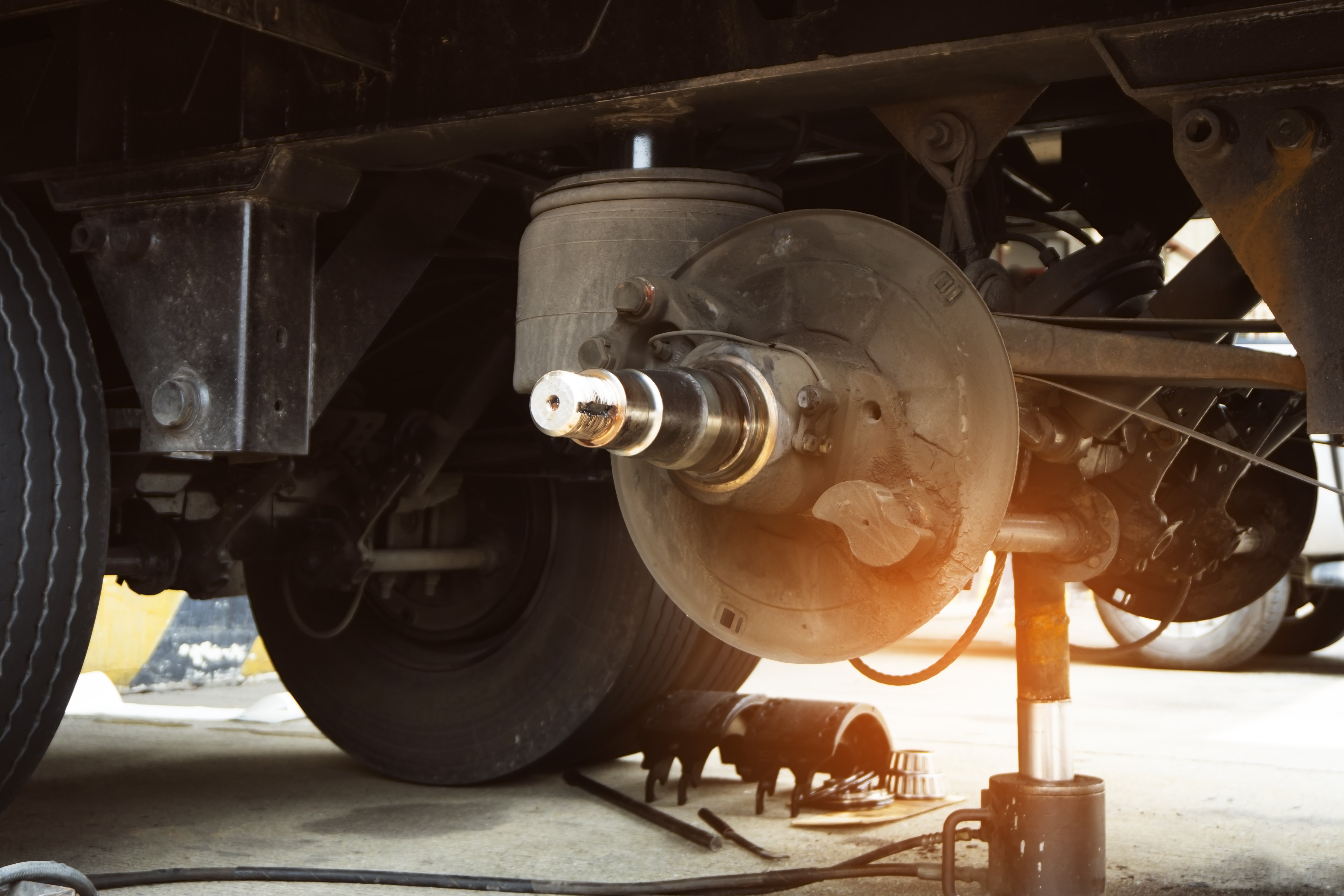
Brake shoes are the friction elements of a drum brake system. Drum brakes are made from steel that’s curved in shape and coated with friction material on one side. Unlike brake pads, brake shoes can be “re-manufactured” or recycled for future use.
During braking, a wheel cylinder in the drum brake system forces the brake shoes outward and against the spinning brake drums. This creates friction, slowing the drum and stopping the truck.
While drum brake systems do not cool as efficiently as disc brake systems, they work great when used on the rear axles of vehicles. That is because braking systems in general send most of their braking effort to the front axles.
As well as being less expensive to manufacture, drum brake systems can be more effective as a parking brake than disc brakes.